

By Janine Thomson, REALTOR® | Pemberton Holmes
Updated October 7, 2026 | Market figures: September 2026
Updated October 7, 2026 | Market figures: September 2026

If you have been wondering whether now is a good time to buy a home in Victoria, BC, there is a practical reason to take a closer look: buyers have options, and a carefully planned search can help you find a home that fits both your lifestyle and your budget.
For a financially prepared buyer, a market with more available homes can offer room to compare properties, investigate their condition and negotiate suitable terms. The opportunity depends on the home you choose, the competition for it and what you can comfortably afford.
My answer is yes—2026 can be a good time to buy in Greater Victoria if your finances, housing needs and purchase strategy align. There is no need to predict the exact bottom of the market to make a thoughtful purchase. There is a need to understand the value and costs of the particular property you are considering.
Start by browsing Victoria and Greater Victoria homes for sale, using the area and property-type filters to focus on residential homes that suit you.
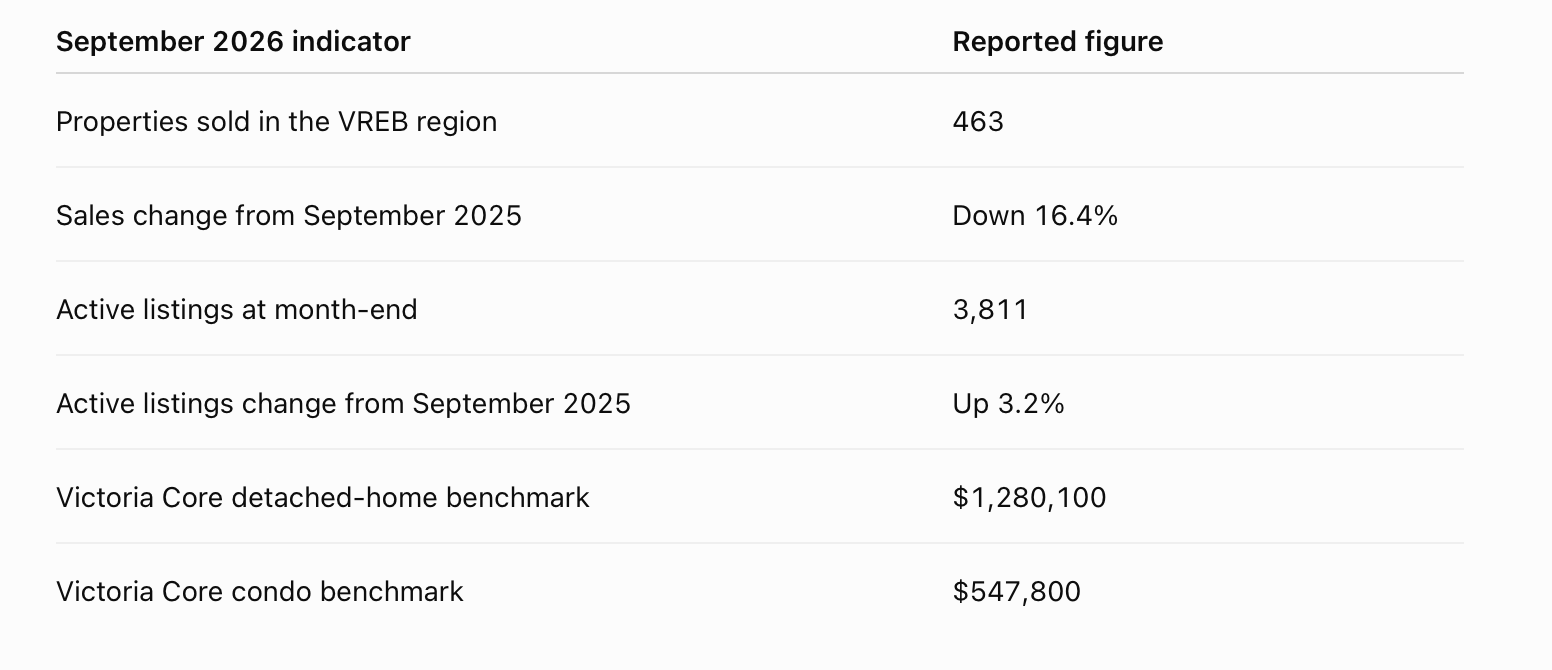
Source: Victoria Real Estate Board, September 2026 report. The benchmarks describe typical properties within the Victoria Core; they are not average sale prices or valuations of individual homes.
Is Victoria, BC a Buyer’s Market in 2026?
The Victoria Real Estate Board’s September 2026 market report, released October 1, described the regional housing market as entering buyer’s market territory. It also cautioned that one month does not establish a lasting trend.Source: Victoria Real Estate Board, September 2026 report. The benchmarks describe typical properties within the Victoria Core; they are not average sale prices or valuations of individual homes.
These figures support a more selective approach to buying. However, regional conditions cannot tell you how much competition exists for a specific home on a specific street. That requires current comparable sales and an assessment of the properties competing with it.
What More Homes for Sale Means for Victoria Buyers
A larger selection lets you make more useful comparisons. Instead of choosing between two imperfect options, you may be able to investigate several homes within your budget and decide which compromises are acceptable.That can mean comparing:
- A central condo with a townhome farther from downtown.
- An updated home with an older property that needs repairs.
- A smaller detached house with a larger strata home.
- A convenient commute with more outdoor space.
- A lower purchase price with higher ongoing ownership costs.
However, available inventory only helps when it matches your needs. Ten homes outside your budget do not create the same opportunity as three suitable properties in your preferred neighbourhood.
My guide to buying a house in Victoria, BC explains how to organize your search from early planning through possession.
How to Evaluate an Asking Price Before Making an Offer
An asking price is the seller’s starting position. Before deciding whether it represents good value, we need to examine the evidence behind it.Compare recent sold properties
The most useful comparisons are homes with similar location, property type, size, condition and features. A renovated detached home should not be judged against an unrenovated property simply because both have three bedrooms.For condos and townhomes, the comparison should also consider the building or complex, monthly fees, parking, outdoor space, floor level and documented building condition.
I help buyers separate meaningful comparisons from properties that look similar online but have important differences.
Review the competing listings
Sold properties show what buyers have paid. Active listings show the alternatives you can choose today.Ask: if two homes cost roughly the same, which offers the better combination of condition, layout, location and ownership costs? A home that compares poorly may deserve a closer pricing conversation.
Examine listing history
Time on market, previous price changes and relisting history can help explain a property’s position. They should prompt questions rather than assumptions.A longer listing period might reflect optimistic pricing, a limited buyer audience, difficult showing access or a feature that does not suit many purchasers. It does not automatically mean the seller will accept a substantial discount.
Treat assessed value as a reference point
BC Assessment explains that assessed values reflect July 1 of the preceding year. A 2026 assessment therefore does not provide an up-to-the-minute October market valuation.Buying below assessed value does not prove that you have found a bargain. Paying above assessment does not prove that you have overpaid. Current comparable sales, condition and property-specific factors provide a more useful basis for your decision.
Can You Negotiate When Buying a Home in Victoria?
Sometimes, yes. Negotiation may be more productive when a property has strong competing alternatives, an asking price unsupported by comparable sales or repairs that affect its value.The seller’s priorities matter too. A seller may value a particular completion date, a clear financing plan or a well-organized offer. Their circumstances should be established through appropriate inquiries; an empty home or a price reduction alone does not establish motivation.
Potential negotiating points include:
- Purchase price.
- Completion and possession dates.
- Included appliances or other agreed items.
- Specific repairs or an agreed adjustment supported by inspection findings.
- Appropriate conditions and time to complete due diligence.
For example, imagine two homes with the same asking price. One has several similar alternatives and needs repairs; the other is recently updated and closely matches recent sales. The same offer strategy may not make sense for both.
Negotiation is most useful when it improves the overall purchase. A price reduction can lose its appeal if major repair costs or unsuitable terms outweigh the savings.
Why Neighbourhood and Property Type Change the Buying Opportunity
Greater Victoria includes many different housing choices. The regional market label is only the starting point.Your search might include Victoria, Saanich, Oak Bay, Esquimalt, View Royal, Langford, Colwood, Sidney or Sooke. Each property still needs to be judged against comparable homes in its own area and price range.
A character home in Fairfield calls for a different comparison than a newer townhome in Langford.
A Sidney condo should be evaluated against suitable condo alternatives rather than detached-home trends elsewhere in the region.
Use my Greater Victoria neighbourhood guide for home buyers to narrow your locations, then test those choices against current listings, commute needs and your budget.
Detached homes
Consider the roof, foundation, drainage, heating, electrical systems, layout and future maintenance. If a suite is part of your plan, investigate its status and your lender’s requirements before relying on projected rental income.Condos and townhomes
Compare the individual home and the strata corporation. Monthly fees are only one part of the picture. Review relevant documents, financial information, insurance and maintenance planning to understand the responsibilities that come with ownership.New construction
Confirm what is included, the applicable taxes, completion arrangements and the terms of any advertised incentive. Compare the full purchase package with resale alternatives before deciding which offers better value for you.Use Your Buying Opportunity to Complete Due Diligence
A market with more choice can give buyers an opportunity to seek suitable conditions, although the seller must agree to them.Depending on the property and your circumstances, an offer may include conditions addressing financing, inspection, insurance, title or strata-document review.
The BC Financial Services Authority’s guide to offers and subject clausesexplains why these clauses need careful wording and why an accepted conditional contract carries obligations.
We will discuss which conditions fit your purchase and realistic deadlines for completing them. A favourable price should come with a clear understanding of the property you are buying.
Should You Buy Now or Wait?
Waiting can make sense if your income is uncertain, you need to build savings or you have not decided where you want to live. Beginning your search can make sense if you have financing in place, understand your costs and expect the home to meet your needs for a suitable period.Before you move forward, consider:- Your comfortable monthly budget. Include mortgage payments, taxes, insurance, utilities, maintenance and strata fees where applicable.
- Your cash needs. Allow for closing costs, moving expenses, immediate repairs and an emergency reserve.
- Your expected time in the home. Buying and selling involve costs that matter if you may move again soon.
- Your flexibility. Expanding the location or property type may create useful alternatives.
- Your financing. Confirm the lender’s requirements for you and the particular property.
What If You Need to Sell Before Buying?
Look at both sides of the move together. A purchase opportunity may be attractive, but your current home also needs realistic pricing and a workable sale timeline.We can compare selling first with other possible arrangements, including an offer conditional on the sale of your home where appropriate. My article on offers subject to the sale of a buyer’s home introduces this option and the issues to discuss.
Frequently Asked Questions About Buying a Home in Victoria, BC
Is now a good time to buy in Victoria?
It can be, if you can comfortably afford the purchase and find a suitable home at a price supported by current evidence. Your personal readiness matters as much as the market label.Can I offer below asking price?
Yes, you can propose a lower price. Whether the seller accepts depends on the property, comparable sales, competing interest and the overall terms. There is no automatic buyer’s market discount.Should I wait for prices to fall further?
Future prices are uncertain. Compare the practical cost of waiting with the suitability and affordability of homes available now. Set a budget you can sustain rather than relying on a forecast.What is the first step to buying a home in Victoria, BC?
Clarify your budget and financing, then identify your preferred locations and property type. An early conversation can help you create a focused search before you begin viewing homes.Find a Victoria Home That Fits Your Budget and Your Life
Buying a home is easier to approach when you have a clear plan and someone helping you assess the details. I work with residential buyers across Greater Victoria to compare homes, understand pricing and prepare offers suited to their needs.Whether you are searching for your first condo, a family townhome, a detached house or a home for your next chapter, we can start with the questions that matter to you.Tell me your budget and preferred neighbourhoods, and I’ll help you identify homes worth considering.
Contact Janine Thomson to start your home search, or browse residential listings across Greater Victoria and filter by your preferred areas.
Janine Thomson, REALTOR® | Pemberton Holmes
Phone: 778-678-5466
Phone: 778-678-5466

Helpful Buyer Resources
To learn more about buying a home in Victoria BC, you may also find these resources helpful:Buyer Resources:
Explore my Victoria BC Buyer Resources
Explore my Victoria BC Buyer Resources
Greater Victoria Neighbourhoods:
Explore Greater Victoria neighbourhoods
Explore Greater Victoria neighbourhoods
Disclaimer
This article is provided for general educational and informational purposes only. It does not constitute legal, financial, tax, lending, insurance, engineering, environmental or investment advice.Real estate market conditions, mortgage requirements, government programs, property taxes, municipal policies, school catchments, transportation services, zoning regulations and legislation may change without notice.
Buyers should complete independent due diligence and consult appropriately qualified professionals, which may include a licensed REALTOR®, mortgage professional, lawyer or notary, accountant, home inspector, insurance provider, engineer, environmental consultant and municipal authority before making a real estate decision.
