Buying, Selling, or Investing? just have some questions? Just ask! We're here to help.
Contact Agent
Home Inspection Explained
Understanding Property Condition in Local Markets
What buyers should know about home inspections, common findings, negotiation options, property condition, and how to make informed decisions before subject removal.
Home Inspection Explained Victoria BC | Janine Thomson, ABR®
Buying a Home › Home Inspection Explained — Victoria BC
Victoria, BC · Buyer Resource Guide
Home inspections explained for BC buyers.
Whether you are purchasing a house, townhome, or condo in Victoria, here is everything you need to know about home inspections before you book one.
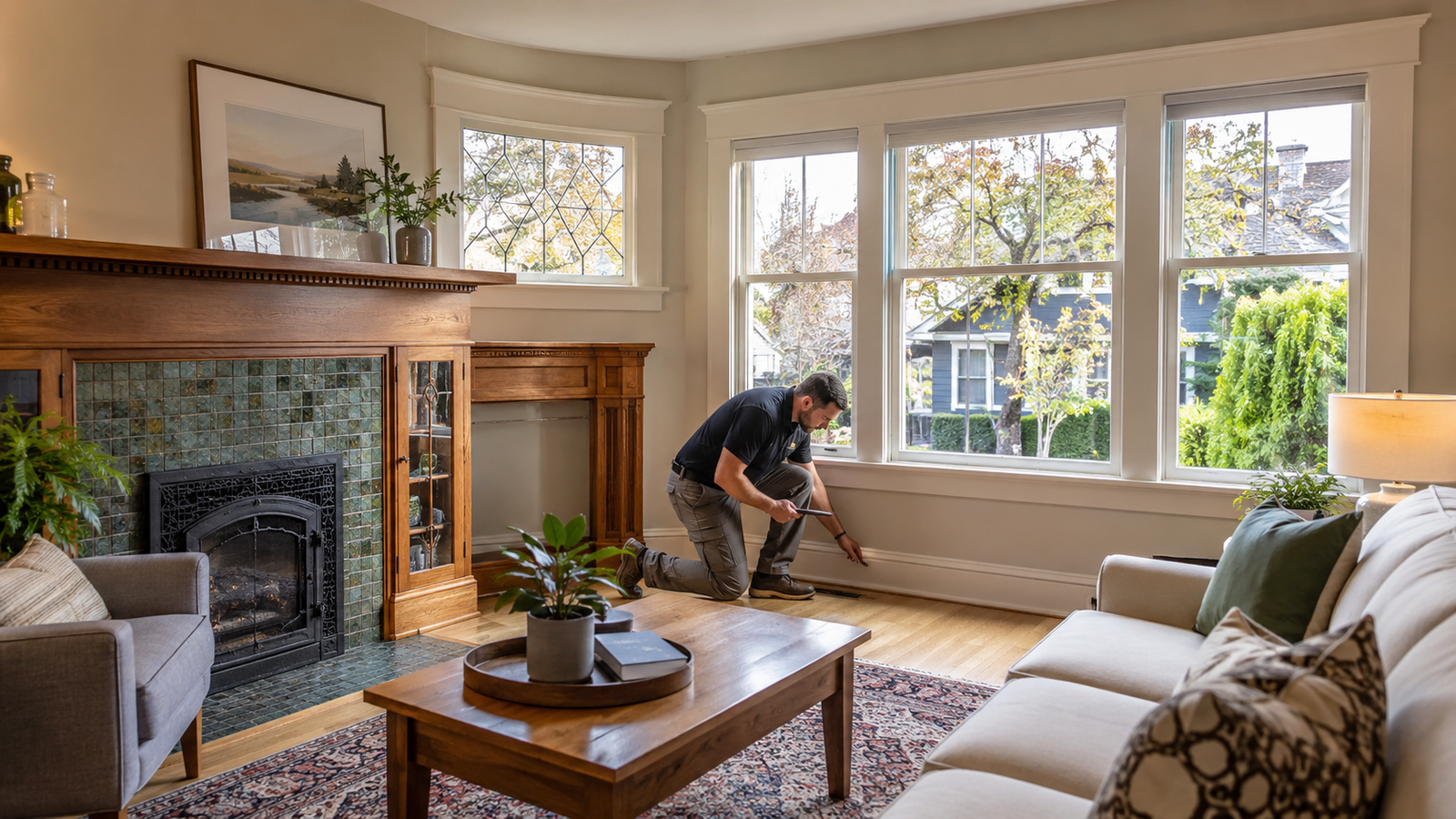
A home inspection is a detailed, visual examination of a property carried out by a licensed inspector before you finalize your purchase. The inspector assesses the physical condition of the home and produces a written report identifying defects, safety concerns, and maintenance items you should be aware of.
In British Columbia, inspections are typically included as a condition in your Contract of Purchase and Sale. This gives you a set number of days — usually five to seven — to have the property inspected, review the report, and decide whether to proceed, renegotiate, or walk away.
Protect yourself
Protect your investment
Identifies issues before they become your financial responsibility after closing. A written report is your evidence and your leverage.
Negotiation tool
Leverage on findings
Material defects can justify a price reduction, seller repairs, or walking away from the purchase entirely.
Future planning
Know what is ahead
Even minor findings help you budget for future maintenance and repairs with confidence — not surprises.
👓
Janine’s advice: Attend the inspection in person. A good inspector will walk you through the property as they work and explain their findings on the spot. The written report is valuable, but being there gives you context that a document alone cannot provide.
British Columbia
How BC regulates home inspectors
British Columbia is one of the few provinces in Canada that licenses home inspectors. Since 2009, all practicing home inspectors in BC must be licensed under the Home Inspector Licensing Regulation administered by ASTTBC — the Applied Science Technologists and Technicians of BC.
What BC licensing requires
To obtain and maintain a BC home inspector licence, individuals must complete approved education and training, pass a licensing exam, carry errors and omissions insurance, adhere to a professional code of ethics, and complete ongoing continuing education.
BC licensed inspectors must follow the Standards of Practice set by ASTTBC. These define what must be inspected, what is excluded, and how findings must be reported. The inspector must provide a written report — verbal-only reports do not meet BC standards and provide no legal protection.
Always ask for your inspector’s BC licence number and verify it at asttbc.org before booking. An unlicensed inspector’s report provides no legal protection and their findings carry no regulatory accountability.
⚠️
Important: Always verify your inspector’s BC licence at asttbc.org before booking. I keep a list of trusted, licensed professionals I recommend to every buyer I work with — reach out and I will point you in the right direction for your property type.
Single-family homes
What gets inspected on a house in Victoria BC
A full home inspection on a detached house is the most comprehensive type. The inspector examines all accessible and visible components from the foundation to the roof — typically taking two to four hours depending on the age and size of the property.
Structure & Exterior
Outside the home
Foundation — cracks, settling, moisture intrusion
Roof covering, flashing, gutters, drainage
Exterior cladding, siding, and trim
Driveway, walkways, grading, lot drainage
Decks, balconies, fences, retaining walls
Chimney and flue condition
Interior & Systems
Inside the home
Electrical panel, wiring type, outlet condition
Plumbing — pipes, pressure, drains, hot water
Heating system — furnace, boiler, or heat pump
Insulation and ventilation — attic and crawlspace
Windows, doors, and interior finishes
Basement or crawlspace — moisture and structure
Older character homes in Victoria
Many character homes in Victoria’s core neighbourhoods — Fairfield, James Bay, Fernwood, Oak Bay — were built before 1970. These properties may contain knob-and-tube wiring, galvanized plumbing, asbestos insulation or vermiculite, and older heating systems.
Your inspector will flag these and recommend specialist follow-up where needed. This is not a reason to walk away from an older home — it is a reason to understand exactly what you are buying and budget accordingly.
Character homes often have remarkable bones and real charm. A thorough inspection helps you buy confidently, not blindly.
Strata properties
Inspecting a townhome in Victoria BC
Townhomes are strata properties, which means the inspection covers two distinct areas — what you own as the unit owner, and what the strata corporation is responsible for maintaining.
Your responsibility
Unit interior
Interior walls, flooring, ceilings, electrical panel, plumbing within the unit, appliances, windows and doors, and any private outdoor space such as a patio or fenced yard.
Strata responsibility
Common property
The roof, exterior walls, foundation, shared utilities, and common areas are the strata corporation’s responsibility to maintain and repair.
Always required
Strata document review
The depreciation report, meeting minutes, and reserve fund balance must be reviewed alongside the physical inspection — they are not optional for any strata purchase.
📋
Do not skip the strata documents. The depreciation report tells you what major repairs are planned and whether the contingency reserve fund has enough money to cover them. An underfunded strata can mean a special levy — a lump-sum charge to all owners — for major work such as a roof replacement or parkade repair.
Condo purchases
Inspecting a condo in Victoria BC
Condo inspections are more limited in scope because the inspector can only access your individual unit. The building structure, envelope, roof, shared mechanical systems, and common areas all belong to the strata and are outside the inspector’s reach on a standard unit inspection.
What gets inspected
Inside your unit
Interior walls, ceilings, flooring — condition and moisture signs
Electrical panel within the suite and all outlets
Plumbing — faucets, drains, shut-off valves
In-suite heating — fan coil, baseboard, or heat pump
Windows and balcony doors — seal and water ingress
Bathroom and kitchen — tile, caulking, ventilation
Appliances — function test of included items
Laundry connections and ventilation if in-suite
Leaky condo history
1982–1998 buildings
Buildings from this era may have building envelope history
Ask specifically about remediation work completed
Request current building envelope inspection on file
Review strata minutes for any ongoing envelope issues
Check reserve fund adequacy for envelope repairs
Consider a specialist envelope review for older buildings
🏠
Leaky condo history in Victoria: A number of buildings constructed between 1982 and 1998 were affected by the BC leaky condo crisis — widespread building envelope failures caused by construction methods common in that era. If purchasing a condo built in this period, ask specifically about building envelope work, remediation history, and whether the strata has a current building envelope inspection on file.
What to watch for
Red flags that warrant serious attention
Not all inspection findings are equal. Minor maintenance items are expected in any property. The following findings should prompt a conversation with your Realtor about next steps — whether that means negotiating, bringing in a specialist, or reconsidering the purchase.
High priority
Water intrusion and moisture
Staining, mould, musty odours, or active dampness in basements, crawlspaces, attics, or around windows. Can indicate foundation issues, roof failure, or envelope problems.
High priority
Electrical concerns
Knob-and-tube or aluminum wiring, overloaded panels, double-tapped breakers, or ungrounded outlets. Many BC insurers will not cover homes with certain older wiring without upgrades.
High priority
Foundation issues
Significant cracking, bowing walls, or evidence of settling or movement. Minor hairline cracks are common — larger horizontal or stair-step cracks deserve immediate specialist assessment.
Monitor closely
Aging roof
A roof near or past its expected lifespan means a significant replacement cost ahead. Ask your inspector for an estimated remaining life and plan your budget accordingly.
Monitor closely
Old plumbing
Galvanized steel pipes corrode internally over time. Poly-B plastic pipes common in 1980s and 1990s homes have a documented history of failure and leaks.
Specialist required
Asbestos or vermiculite
Common in pre-1990 homes. Undisturbed asbestos is not immediately dangerous but must be professionally assessed before any renovation work is planned.
Practical guidance
What to expect from the inspection process
Knowing how the inspection process works from start to finish helps you stay organized and make the most of the time you have within your subject removal window.
1
Booking
Your Realtor typically books the inspection within one to two days of offer acceptance. Choose a licensed ASTTBC inspector — Janine keeps a list of trusted professionals she recommends to her clients across Greater Victoria.
2
Attending
Show up for the inspection. Walk through the property with the inspector, ask questions, and take notes. What you learn in person goes far beyond what appears in the written report.
3
The report
A written report is required by BC law. You will typically receive it within 24 hours. Review it carefully with your Realtor before making any decisions about next steps.
4
Next steps
Based on findings, you can proceed as planned, renegotiate price or terms, request specific repairs, bring in a specialist, or remove your offer if findings are material enough to change your decision.
5
Specialists
A home inspector is a generalist. For specific concerns — structural, asbestos, oil tanks, mould, building envelopes — a specialist inspection may be warranted and worth the additional cost.
6
Subject removal
You typically have five to seven days from offer acceptance to complete your inspection and remove or waive your condition. Use that window fully — do not rush this step.
🔎
One inspector, one opinion. If a finding concerns you and the inspector is uncertain about severity, bring in a specialist before removing your subjects. That is exactly what the condition period is for — use it.
Common questions
Home inspection FAQ — Victoria BC buyers
Honest answers to the questions buyers ask most about home inspections in British Columbia.
Can I skip the inspection in a competitive offer situation? ⌄
You can, but it carries real risk. Removing the inspection condition makes your offer more attractive to sellers, but you purchase the property with no ability to renegotiate or walk away based on condition findings. A pre-offer inspection — completed before submitting your offer — is sometimes a practical alternative worth exploring for highly competitive situations.
What if serious problems are found? ⌄
You have options. You can renegotiate the purchase price, request the seller complete specific repairs before closing, accept the property as-is with full knowledge of the issues, or remove your offer entirely. Your Realtor will advise you on the best approach based on the specific findings and current market conditions.
How long does a home inspection take in Victoria BC? ⌄
A condo inspection typically takes one to two hours. A townhome takes two to three hours. A full single-family home inspection generally takes two to four hours depending on the size and age of the property. Older character homes with complex systems often take longer.
Is a home inspection required by law in BC? ⌄
No — a home inspection is not legally required. However, it is strongly recommended and standard practice in virtually all residential purchase transactions in BC. Your Realtor will include an inspection condition in your offer to give you the time and right to have one completed.
Should I get an inspection on a new construction home? ⌄
Yes. New builds in BC undergo municipal building inspections during construction, but these do not replace a buyer’s home inspection. An independent inspection before possession can catch deficiencies while the builder is still responsible for correcting them under the BC New Home Warranty.
Who pays for the home inspection? ⌄
The buyer pays the inspector directly — typically $500 to $1,200 depending on the property type and size. It is not credited toward your purchase price unless negotiated as part of an offer resolution. Budget for it as part of your overall closing costs when planning your purchase.
What is the difference between a home inspection and a strata document review? ⌄
A home inspection assesses the physical condition of the property. A strata document review examines the financial health of the strata corporation, planned repairs, meeting minutes, bylaws, and the contingency reserve fund. For any strata purchase in Victoria BC, both are important and they complement rather than replace each other.
What clients say
Buyers who trusted Janine to guide them through
★★★★★
“Janine works for you to achieve the best outcome. She is passionate about what she does. Above and beyond is what I experienced. If you want someone to truly represent you and understand your needs, she is simply the best in the area.”
— Troy Wilson, Victoria BC
★★★★★
“Janine was easy to work with and understood what our requirements were. She was highly dedicated and I would have no hesitation in recommending her. Her professionalism and interpersonal skills are second to none.”
— Ralph Miller, Victoria BC
Explore More
Buyer, neighbourhood & market resources
Everything you need as a buyer in Greater Victoria — guides and tools, a live home search, the neighbourhoods to explore, and what the market is doing right now. Tap any card to dig deeper.
Have a question that isn’t answered here? Just ask.
There is no question too basic or too complex. Buying a home in Victoria is a big step — my job is to make sure you take it with confidence, clarity, and the right person in your corner.
By Janine Thomson - Victoria Realtor | Pemberton Holmes
If you’re a first-time buyer in Victoria right now, you’re probably asking the same question everyone else is: Is homeownership still realistic, or am I priced out?The honest answer is yes, you can still afford to buy—but the strategy, expectations, and numbers have changed.Let’s break it down w...
By Janine Thomson - Victoria Realtor | Pemberton Holmes
Buying your first home is one of the biggest financial decisions you’ll ever make—and in a competitive market like Victoria, it can feel overwhelming without a clear plan.The key to success is understanding the process from start to finish. When you know what to expect, you can make confident d...
By Janine Thomson - Victoria Realtor | Pemberton Holmes
If you’re planning to buy your first home in British Columbia, especially in high-demand markets like Victoria, understanding the available grants and incentives can make a significant financial difference.
Many first-time buyers are unaware that there are multiple programs designed to reduce u...